
International Journal of Environmental Pollution and Remediation (IJEPR)
ISSN: 1929-2732

Volume 13 - Year 2025 - Pages 84-89
DOI: 10.11159/ijepr.2025.010
Nature-Based Solutions to Rehabilitate Erosion Processes in a Brazilian Urban Settlement
Lara Pessl1, Maria Thereza Fonseca1, Juni Cordeiro3, Maria Giovana Parizzi4, Maria Rita Scotti1,2
1School of Architecture. Federal University of Minas Gerais, Brazil
Address: Antonio Carlos Avenue, 6627, Pampulha, Belo Horizonte, Brazil. Zip Code: 31270-901
E-mail: larapessl@gmail.com, mariatsfonseca@gmail.com
2 Department of Botany /ICB/Federal University of Minas Gerais, Brazil
3 Department of Hydraulic Engineering and Water Resources/ Federal University of MinasGerais, Belo Horizonte, Brazil
4 Department of Geology/ Institute of Geosciences/ Federal University of Minas Gerais, Brazil
Abstract - The study site, an informal settlement in Contagem, within the Belo Horizonte metropolitan area, faces severe erosional processes. This degradation stems from urban expansion's profound impact on a landscape characterized by a high density of headwaters. The rapid and intense urbanization has significantly altered natural hydrological pathways, leading to gully formation in preserved areas and ravines in urbanized sectors. Given this critical environmental context, rehabilitation procedures employing nature-based solutions (NBS) were recommended. A model was proposed for the restoration of degraded water channels, stabilization of eroded slopes, and improvement of urban thoroughfares, directly targeting areas most impacted by erosional phenomena. Consequently, a three-tiered restoration framework was established for the site: 1-channel restoration, focused on managing water velocity and flow dynamics; 2-slope restoration, implemented in two stages—physical stabilization via berm construction along contour water lines and biological stabilization through the planting of herbaceous and woody species; 3- street restoration, aiming to enhance hydrological pathways via gutters and collector drains, as well as to boost permeability through rain garden construction.
Keywords: Rain garden, Street erosion, Slope erosion, Nature-based solutions, Water channel.
© Copyright 2025 Authors - This is an Open Access article published under the Creative Commons Attribution License terms. Unrestricted use, distribution, and reproduction in any medium are permitted, provided the original work is properly cited.
Date Received: 2025-06-10
Date Revised: 2025-11-03
Date Accepted: 2025-11-27
Date Published: 2025-12-09
1. Introduction
The city of Contagem, located within the Metropolitan Region of Belo Horizonte (RMBH) (Figure 1A), has a population of 2,315,560 inhabitants [1]. It stands out as a significant industrial hub in Minas Gerais. Throughout the 20th century, particularly from the 1940s forward, Contagem experienced rapid industrialization and urbanization, driven by the establishment of the Industrial City, Brazil's first planned industrial district. This district alone accounts for 621,863 inhabitants [1].
This urban growth, however, occurred in an uncoordinated manner, leading to the formation of peripheral settlements characterized by precarious infrastructure and high levels of socio-environmental vulnerability. The neighborhood of Nova Contagem, with a population of 55,000 inhabitants, exemplifies this reality, accommodating various settlements. Despite its expansion, the neighborhood faces significant challenges, such as deficient sanitation and the risk of erosive processes, including gully formation [2]. The latter is associated with the presence of an extensive hydrographic network, as the municipality is situated between two major hydrographic basins in Minas Gerais: the Paraopeba River basin and the Velhas River basin (Figure 1B). The study area (Figure 1A) is located within the Paraopeba River basin and the Retiro Stream sub-basin.
The invaded settlement area known as Estaleiro is located in a geological sector characterized by Precambrian rocks of the Atlantic Shield, which comprises Archean granites and weathering gneisses rocks, which are highly susceptible to erosion [3]. This area also contains numerous headwaters and watercourses, establishing a direct link between local geological conditions and the risk of gravitational slope movements and erosion processes, including landslides and collapses—especially in areas occupied by precarious settlements [3].
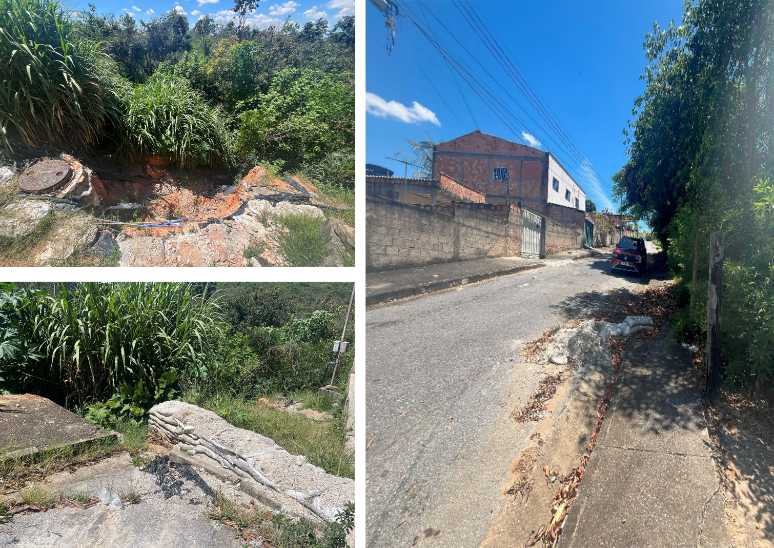
In addition to these geological characteristics—common to many settlement areas in developing countries— Estaleiro settlement lacks an adequate drainage system and frequently experiences flooding events. These events exacerbate the erosion of roads, footpaths, houses, and urban infrastructure [4].
Soil erosion results from the disaggregation of soil particles followed by their transport and deposition from one location to another. While erosion can be driven by wind, it is primarily caused by water, and its severity is influenced by factors such as soil vulnerability, topography, rainfall intensity, and insufficient vegetation or land cover [5]. Vegetation serves as the primary natural mechanism for preventing erosion and conserving soil and water resources [6].
The canopy shields the soil from wind and raindrop impact, while roots stabilize the substrate. However, the most significant contribution of vegetation lies in the production of recalcitrant organic matter—derived from the decomposition of lignified litter—which promotes the formation of stable soil aggregates, enhancing both stabilization and permeability [7]. Conventional engineering approaches mitigating water-induced soil erosion and protecting hillslopes typically involve gray infrastructure, such as concrete channeling, gabion walls, concrete piles, geotextiles, anchored triple-torsion wire mesh, and concrete-lined ditches [6]. Nature-Based Solutions (NBS) represent an alternative approach to managing surface runoff, mitigating erosion processes and reducing flood risks in urban settlements, while simultaneously delivering social and environmental co-benefits [8].
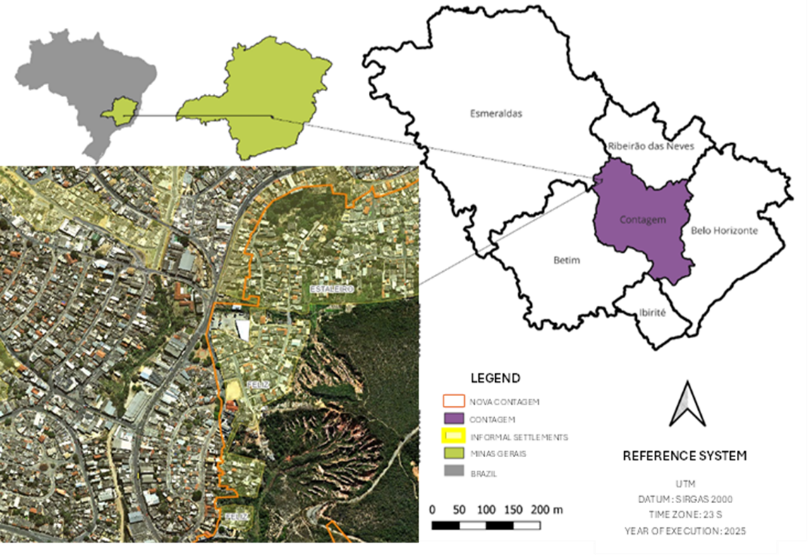
B
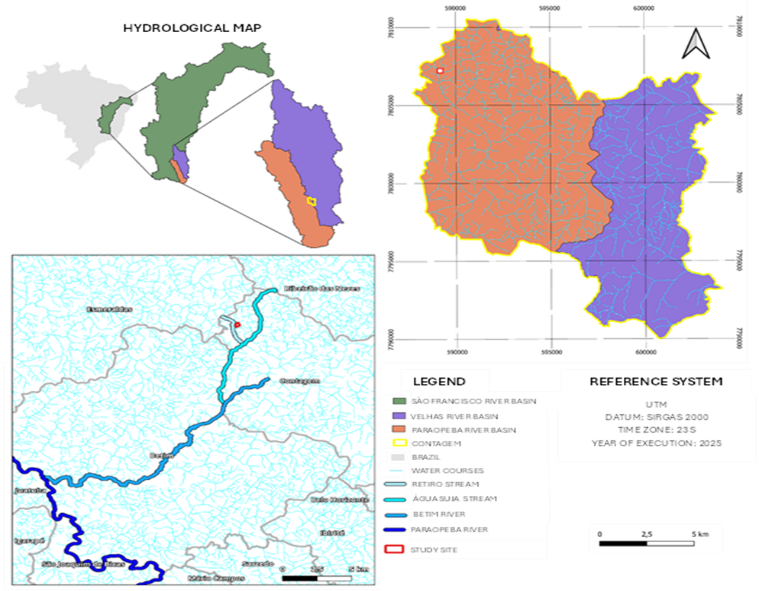
According to the International Union for Conservation of Nature’s (IUCN), it’s necessary that nature-based solutions (NBS) integrate urban informal settlements communities in circular economy action though social capital main principles. Social capital has been defined as ‘‘connections among individuals-social networks and the norms of reciprocity and trustworthiness that arise from them’’ [9]. Such approach must be built trough trust among networks among individuals, associations, local governance and companies aiming to subsidize financial costs of implantation and maintenance on the planned procedures for NBS implementation [10]. From this perspective, and aiming to remediate erosion processes in natural drainage areas along Estaleiro settlement streets (Figure 2) we propose a model for erosion stabilization. This restoration model of natural channels and streets in urban areas is designed to be feasible and replicable by municipal governments in small and developing cities.
2. Material and Methods
2.1. Study site
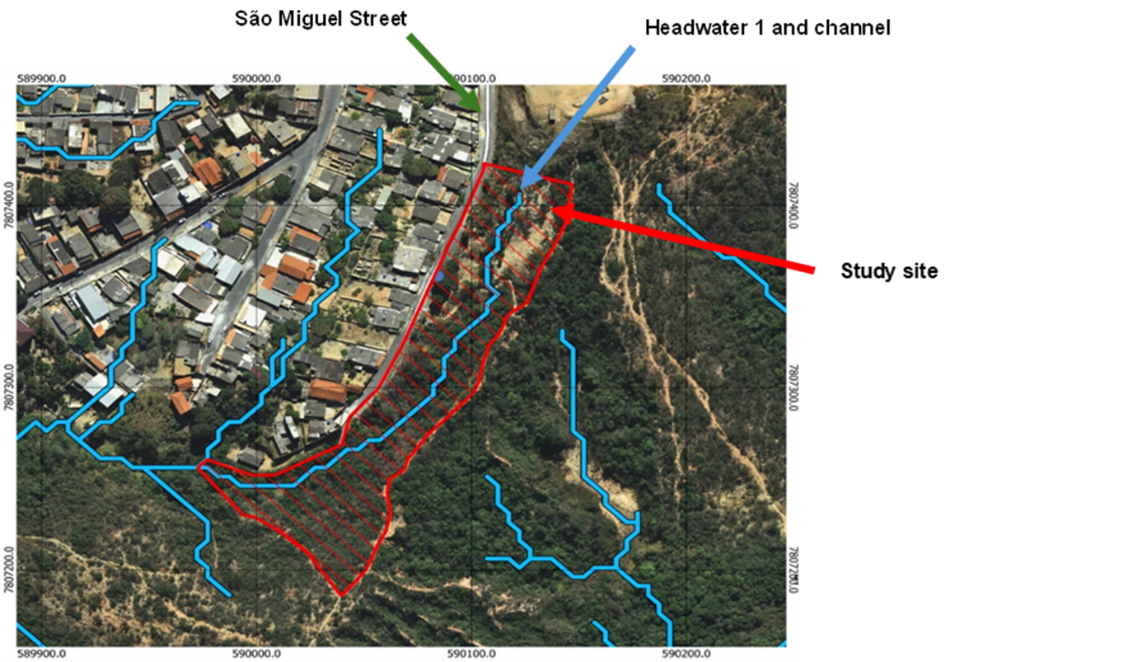
The study site (Figure 3) is located in the city of Contagem in the state of Minas Gerais. The region is known as Estaleiro, which is an informal settlement in the northwest part of the city. The coordinates of the study site are latitude: 19°49'38.71"S and longitude 44° 8'22.87"W. The study site has been suffering interference from the high-speed pressure of the urban process, which resulted in formation of many informal settlements. Due to the high number of headwaters in the area, the intense urbanization process became a harmful factor to the natural headwater flow which resulted in intensive erosion process in the urban area and gullies in the preserved areas. Considering this context, it is recommended to assure the protection and direction of the water flow.
2.2. Channel flow estimation
To reconstruct the natural drainage channel (Figure 3), contour lines were used to identify the headwater point, which was located near the 900-meter elevation mark. To determine the dimensions of the conduit channel, it was necessary to calculate the terrain slope (%). To estimate the average flow rate rainfall data was uded in the IDF equation (Intensity, Duration, and Frequency – Equation), which is commonly used to estimate extreme rainfall events [11]. For this analysis, a return period (RP) of 20 years and a rainfall duration of 10 minutes were adopted. The local parameters k, a, b, and c required for the IDF equation (Equation 1) were obtained using Pluvio 2.1 software.

Where i = intensity (mm/h), tr = return time (years), t = rainfall duration (minutes), k = 833.45 (local parameter), a = 0.173 (local parameter), b = 7.174 (local parameter) and c = 0.701 (local parameter)
To estimate the maximum flow, the “Rational Method” [12] was used (Equation 2):
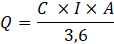
Where Q = flow (m³/s); i = rainfall intensity (mm/h); A = area (km²); C = Surface runoff coefficient of the Rational Method.
An average flow rate of 0.32 (m³/s) was estimated for the study site.
Using the SisCCoH software System for Calculating Hydraulic Components, it was possible to verify the hydraulic dimensioning of the channels designed to adapt the average flow rate to 0.32 m³/s.
2.3. Slope Estimation
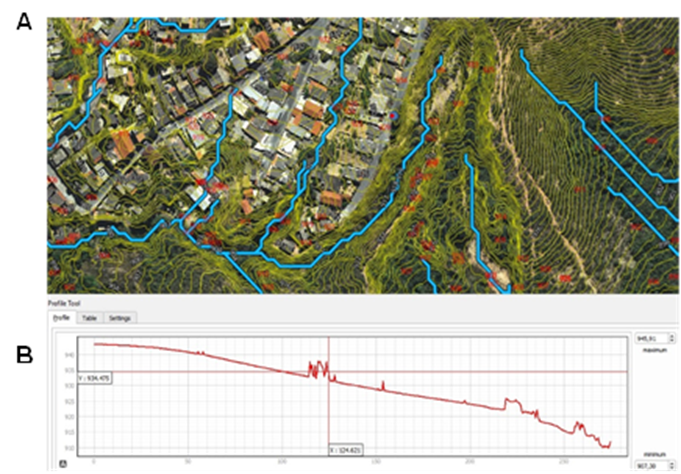
São Miguel street slope was estimated using the “Profile Tool” plug in on QGis software version 3.40.4.
3. Results and Discussion
3.1 Channel Recovery
The conduit channel was dimensioned based on its flow capacity, as shown in Table 1. The results indicate that the channel has a low slope, which contributes to water retention and maintain natural flow. This supports the hypothesis that erosion in the area is primarily due to water stagnation. Therefore, is recommended increasing the channel's flow capacity by modifying its dimensions (Table 1, Figure 3).

3.2 Slope Recovery
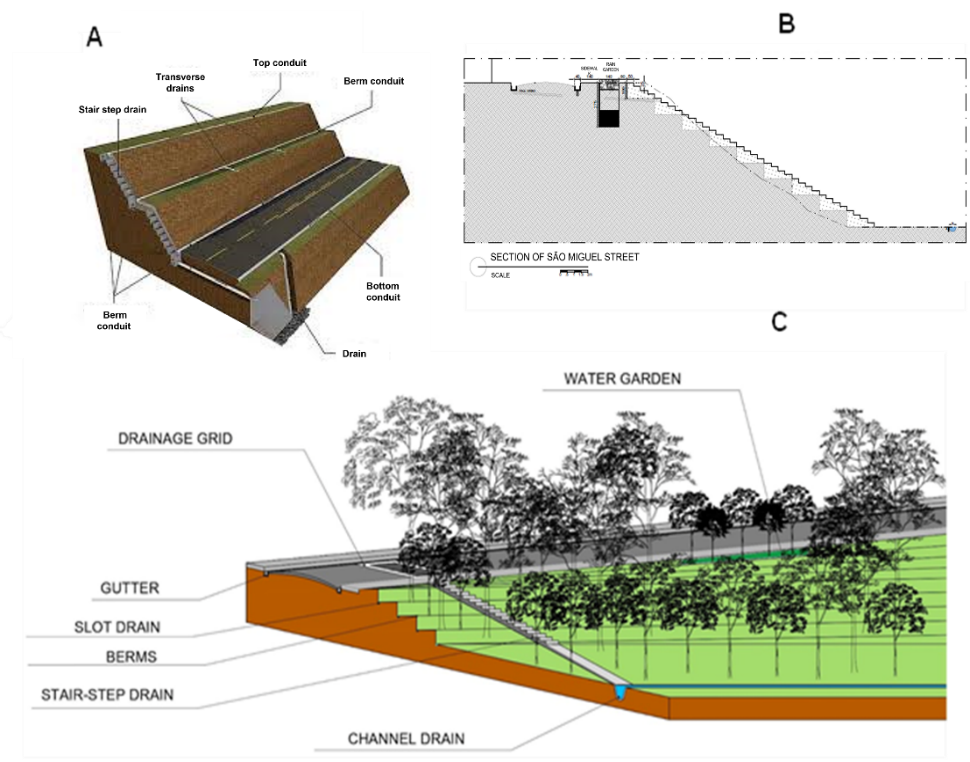
Figures 3 and 4 shows Sao Miguel Steet slope rate, which justifies the rainfall water erosivity potential. Aiming stabilization, the slope was divided into three sections composed of varying numbers of berms or steps (Table 2). Each 1-meter berm or step will be stabilized with a 40 cm high strip of stones at its base (Figure 5 A and 4B). Following physical stabilization, the slope will undergo biotic stabilization through the planting of native woody and herbaceous species.

Therefore, for slope stabilization, two strategies were proposed:
1- Physical stabilization involves the construction of stepped slopes with berms anchored by rockfill, integrated with drainage channels and stair-step drain (Figure 5A and 5B) to ensure proper conduction of rainwater and runoff from São Miguel Street.
2- Biological stabilization, through the planting of native herbaceous and tree species (Figure 5C). To enhance soil aggregation and slope stability, we recommend inoculation plants with arbuscular mycorrhizal fungi (AMF), as supported by literature [14].
3.3 Street Recovery
To stabilize São Miguel Street, the construction of roadside gutters parallel to the sidewalks were proposed, both on the left and right sides, totaling 300 meters of length on each side. Each gutter will measure 0.20 meters in width and 0.20 meters in depth. These gutters will be interconnected by six transverse collector drains (Figure 6), each measuring 6 meters in length, 0.30 meters in height, and 0.20 meters in width, filled with 2.0 cm diameter stones. Each transverse drain will discharge into a stair-step drain on the slope, where each step will measure 0.5 m x 0.5 m x 0.25 m. Additionally, three rain gardens will be built on the first berm, each measuring 10 m x 1.4 m x 1.50 m.
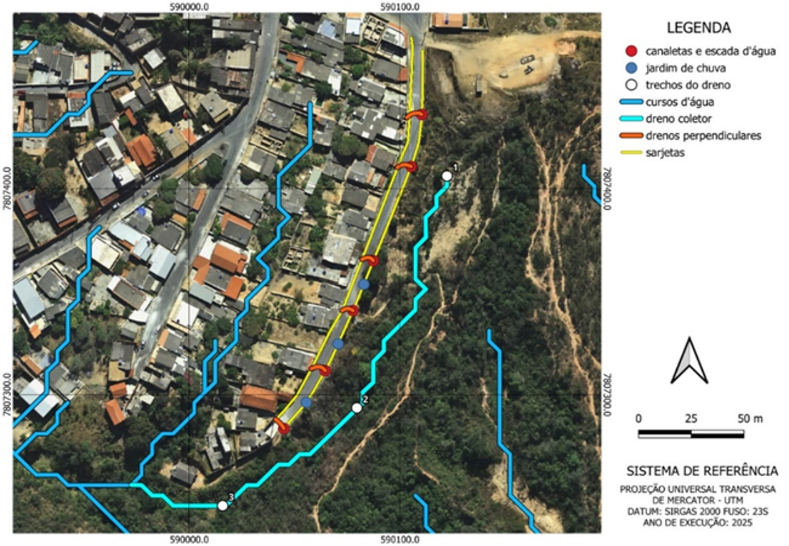
Using Nature-based solution to stabilize São Miguel Street, the system of parallel gutters and transverse collector drains was designed to efficiently direct surface runoff to the main collector channel (Figure 6 and Figure 7A and 7B). These transverse drains will be covered by a protective grid (Figure 7A and Figure 7B). At the end of each transverse conduit drain, where it meets the right-side gutter, a stone stair-step drain will be built to guide the water down to the main conduit channel (Figure 5C and Figure 6). From the third transverse drain onward, due to the steep slope, three rain gardens will be implemented on the first slope edge (Figure 6, Figure 7C and Figure 7D). The purpose of these rain gardens is to mitigate the excessive surface runoff on São Miguel Street, reducing the urban flooding, as well as the erosion slope risks [15].
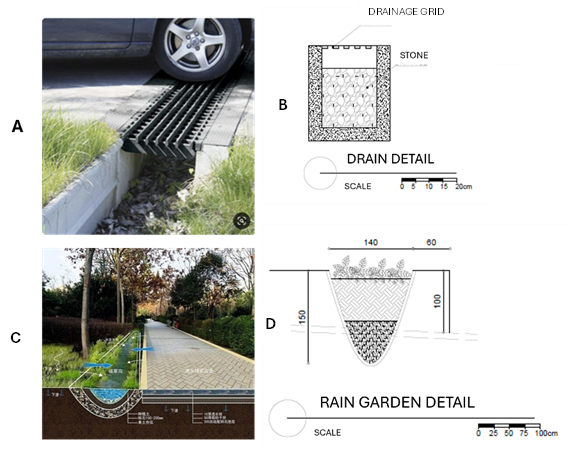
The urban impervious surfaces promoted by asphalt seal the soil layers and cause surface runoff, which leads to urban flooding. The rain garden is a bioretention system composed of layers of high permeability materials as stones and layers of stabilizing organic matter to also increase infiltration. In a rain garden the top layer is formed by native vegetation composed by herbaceous, shrubs and woody species which act as filters and soil stabilizer elements through soil aggregates formation [15].
These interventions aim to stabilize both São Miguel Street and the adjacent slope along the headwater’s main conduit channel. Moreover, they ensure the efficient conveyance of stormwater to the gully conduit drain, which ultimately connects to the Retiro Stream. This restoration approach is based on nature-based solutions and integrates key ecosystem functions into the design. The potential effectiveness of these erosion control and slope and drainage stabilization procedures on Sao Miguel Street are based on the success of the rehabilitation of urban channels in Victoria informal settlement in Izidora basin in Belo Horizonte, Brazil [18]. Among the NBS rehabilitation procedures, we can highlight the successful construction of mini barrier along the channels and the establishment of a riparian forest to control the erosive process on the slopes. Similarly, we expect that these successful NBS strategies used in headwater areas can have the same efficiency in São Miguel Street gullies.
4. Conclusion
The advanced process of erosion has significantly impacted a low-income urban settlement, leading to substantial destabilization of both street infrastructure and adjacent slopes. This environmental degradation critically compromises the structural integrity of residential dwellings. Given the confluence of high environmental risk and precarious socio-economic conditions within the affected community, the implementation of restoration measures needs cost-effective solutions that align with the fiscal limitations of the local municipality. Nature-based solutions (NBS) emerge as the most efficient and sustainable approach for remediation. Specifically, proposed interventions include fluvial channel restoration, to mitigate hydraulic energy and regulate water flow velocity. Concurrently, slope stabilization will integrate a combination of green and grey reinforcement techniques. Furthermore, street infrastructure restoration will focus on re-establishing appropriate hydrological pathways and enhancing surface permeability through the strategic deployment of green infrastructure, such as rain gardens, to facilitate effective stormwater management.
Acknowledgements
The present study was supported by the Fundação para o Desenvolvimento Científico e Tecnológico em Saúde (FIOTEC), as well as by the "Pro-Rectory of Extension of the Federal University of Minas Gerais", and also by the Municipality of Contagem/MG. The authors are grateful to the "Coordination for the Improvement of Higher Education Personnel" (CAPES) for the scholarship and Postgraduate Program in Built Environment and Sustainable Heritage at UFMG.
References
[1] INSTITUTO BRASILEIRO DE GEOGRAFIA E ESTATÍSTICA (IBGE). Censo Demográfico 2022: população e domicílios: primeiros resultados. Rio de Janeiro: IBGE, 2023. Disponível em: View Article
[2] Estado de Minas. (2014). Região de Nova Contagem tem valorização de imóveis e assiste a recorde de lançamentos. Lugar Certo. 12 jan. 2014. Disponível em: View Article
[3] Borrelli, L., Ciurleo, M., & Gullà, G. (2018). Shallow landslide susceptibility assessment in granitic rocks using GIS-based statistical methods: The contribution of the weathering grade map. Landslides, 15(6), 1127–1142. View Article
[4] Jiusto, S., & Kenney, M. (2016). Hard rain gonna fall: Strategies for sustainable urban drainage in informal settlements. Urban Water Journal, 13(3), 253-269. View Article
[5] Panagos, P., Borrelli, P., Poesen, J., Ballabio, C., Lugato, E., Meusburger, K., Alewell, C., 2015. The new assessment of soil loss by water erosion in Europe. Environ. Sci. Pol. 54, 438–447. View Article
[6] Morvan X, Naisse C, Issa OM, Desprats JF, Combaud A, Cerdan O. 2014. Effect of ground-cover type on surface runoff and subsequent soil erosion in Champagne vineyards in France. Soil Use and Management 30: 372–381. View Article
[7] Zhao C, Gao J, Huang Y, Wang G, Zhang M. 2015. Effects of vegetation stems on hydraulics of overland flow under varying water discharges. Land Degradation & Development. DOI:10.1002/ldr.2423. View Article
[8] Sagala, S., Murwindarti, A., Avila, B. E., Rosyidie, A., & Azhari, D. (2022, February). Sustainable Urban Drainage System (SUDS) as Nature Based Solutions Approach for Flood Risk Management in High-Density Urban Settlement. In IOP Conference Series: earth and environmental science (Vol. 986, No. 1, p. 012055). IOP Publishing. View Article
[9] Fortes, B. C. S., Teixeira, M. C. V., da Costa, S. P., Wagner, M. H., & Scotti, M. R. (2022). Post-disaster recovery plan for a rural settler's community affected by the Fundão dam tailings in Brazil. Journal of Rural Studies, 93, 55-66. View Article
[10] Fortes, B. C. S., Teixeira, M. C. V., da Costa, S. P., Wagner, M. H., & Scotti, M. R. (2022). Post-disaster recovery plan for a rural settler's community affected by the Fundão dam tailings in Brazil. Journal of Rural Studies, 93, 55-66. View Article
[11] Pinheiro, M. M. G. Study of intense rainfall in the metropolitan region of Belo Horizonte – RMBH. Belo Horizonte: EE-UFMG. Master's Thesis, 1997. 216 p. View Article
[12] Pinheiro, M. M. G., & Naghettini, M. Regional Analysis of Frequency and Temporal Distribution of Storms in the Metropolitan Region of Belo Horizonte. Revista Brasileira de Recursos Hídricos. 3(4), 73-88, 1998. View Article
[13] Santoro, Emanuel Machado. Proposta de recuperação dos km 479 e 482 da rodovia MGT-342. 2018. Fundação Presidente Antônio Carlos, Faculdade Presidente Antônio Carlos de Teófilo Otoni. Teófilo Otoni, 2018. View Article
[14] Six J, Elliott ET, Paustian K. Soil macroaggregate turnover and microaggregate formation: a mechanism for C sequestration under no-tillage agriculture. Soil Biol Biochem 2000; 32:2099–103. View Article
[15] Osheen, & Singh, K. K. (2019). Rain garden—A solution to urban flooding: A review. Sustainable Engineering: Proceedings of EGRWSE 2018, 27-35. View Article
[Quincunx. (2013, June 6). Protección de la biodiversidad I: pasos para anfibios [Biodiversity protection I: Steps for amphibians]. View Article
[17] Li, M. Sponge City Mini-Lesson: Let's Look at Eight Common Facilities in "Sponge Cities"]. KK News. View Article
[18] Fonseca, M. T., dos Santos, G. P., Cordeiro, J., Mendes, R. S. M., Netto, M. M. G., Moura, P. M., & Scotti, M. R. (2025). Impact assessment and rehabilitation of an informal settlement using sustainable urban drainage systems as a nature-based solution in Brazil. Environmental Development. View Article